
English| EUR
Suggested for you
More currencies
Choose a language
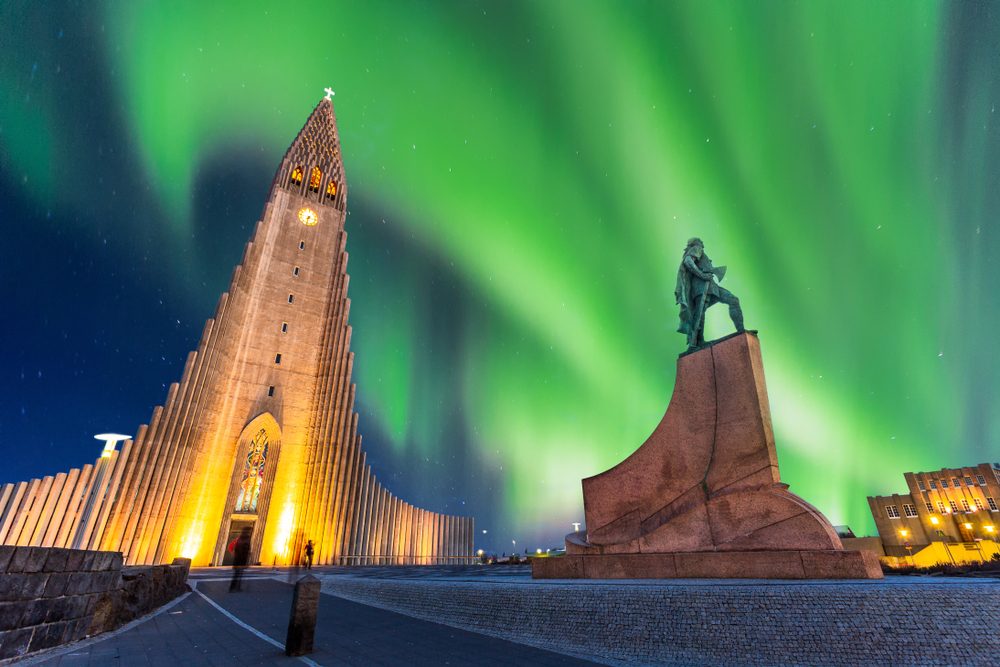
Reykjavik sits at 64°N latitude, well inside the auroral zone, but urban light pollution complicates visibility from the city center. Whether the capital works as a viewing location depends on solar activity strength, cloud cover, and how far you venture from downtown streetlights.
Quick answer
Reykjavik can deliver northern lights sightings during strong geomagnetic storms when the aurora is bright enough to cut through urban glow, but the city's light pollution reduces visibility compared to darker rural sites. On nights with KP index above 3, you may catch the aurora from coastal paths or parks on the city's edge. For consistent viewing, locations 20–40 kilometers outside the capital offer darker skies and better contrast.
Reykjavik records an average of 80–100 aurora-visible nights per winter season, yet only a fraction of those displays register clearly from within city limits. The capital's compact downtown and harbor districts generate enough artificial light to wash out faint green bands, leaving only the brightest auroral arcs visible to the naked eye. Geomagnetic latitude places Reykjavik squarely beneath the auroral oval during moderate solar wind conditions. When the KP index climbs to 4 or higher, the aurora brightens and drops lower in the sky, making it visible even through moderate light pollution. Coastal walking paths along Sæbraut and the Grotta lighthouse area on the Seltjarnarnes peninsula offer darker pockets within a 10-minute drive from downtown, where streetlights thin and the northern horizon opens over Faxaflói Bay. On clear nights with active solar conditions, these spots produce usable sightings without leaving municipal boundaries. Cloud cover poses a larger obstacle than light pollution during Iceland's winter months. Reykjavik's maritime climate delivers frequent low-pressure systems that blanket the coast while leaving interior highlands clear. Checking real-time aurora forecasts and satellite cloud maps lets you pivot to clearer zones when the capital sits under overcast skies. The flexibility to drive 30 minutes east toward Þingvellir or south toward the Reykjanes Peninsula turns Reykjavik into a functional base rather than a fixed viewing site. Timing determines whether is Reykjavik a good place to see the northern lights on any given night. September through March offers the longest darkness windows, with nautical twilight ending by 21:00 and solar activity often peaking between 22:00 and 02:00. Arriving during a new moon phase eliminates lunar interference, and monitoring real-time KP forecasts helps you distinguish nights worth staying in the city from those requiring a countryside drive. Reykjavik works when conditions align, but treating it as a staging point rather than a destination increases your odds of clear sightings.
“Reykjavik records an average of 80–100 aurora-visible nights per winter season, yet only a fraction of those displays register clearly from within city limits.”
The prime window to view the northern lights in Reykjavik spans from late September to late March when extended darkness provides the necessary conditions. Within these months, the best arrival window is 21:00–02:00, as solar activity often peaks during these late hours.
Cool, 3°C to 8°C
Early season offers milder temperatures and sufficient darkness.
Cold, -2°C to 3°C
Peak winter provides the longest nights, increasing opportunities for sightings.
Chilly, -1°C to 4°C
Extended daylight begins to return, but nights remain dark enough for viewing.
Verdict: The best opportunity to observe the lights occurs between November and January during the 21:00–02:00 arrival window.
Reykjavik is a public space that remains accessible throughout the day and night. Visitors may access viewing areas at any time.
Reykjavik is located in Iceland, and the most effective way to reach darker viewing areas is by utilizing the local public bus network or by traveling to the coast on foot. Moving away from the city center light pollution is essential for optimal visibility.
Strætó lines 1, 3, or 6 to Grandi area
Walk along the coastline toward Grótta Lighthouse
Drive via Route 41 to Seltjarnarnes
Focus on the Grótta Lighthouse area or the coastal paths near the Sun Voyager sculpture to minimize local light interference. Ensure you check the local weather and cloud cover forecasts before departing from your accommodation.
Reykjavik is a public space with no entrance fee, but successful aurora viewing requires specific preparation.
Reykjavik's urban location creates challenges that catch many visitors off guard. Light pollution and weather variability mean visibility is never guaranteed from the city center.
Staying in the city center and expecting clear views
Move to darker areas outside the city or join a tour that travels beyond the light pollution zone.
Assuming any clear night will show auroras
Check the aurora forecast (KP index) and cloud cover predictions before heading out—solar activity must be present.
Going out too early in the evening
Wait until full darkness after 21:00, when both sky conditions and aurora activity are more favorable.
Ignoring the moon phase when planning
A full moon adds significant light pollution; plan trips during new moon phases or when the moon sets early.
Expecting the lights to look like vivid photographs
The naked eye sees mostly green and white; cameras with long exposures capture the intense colors seen in photos.
Giving up after one cloudy night
Weather changes rapidly in Iceland—persistence over multiple nights significantly increases your chances of success.
Everything you need to know about is reykjavik a good place to see the northern lights
Reykjavik serves as a convenient base for aurora hunting, though city light pollution can impact visibility compared to darker rural areas. Many travelers choose to book a boat tour to escape coastal city glow for clearer skies. While the city itself is accessible, finding the right dark spot is key. Understanding whether is reykjavik a good place to see the northern lights depends on your willingness to seek out low-light environments.
While the aurora can sometimes appear overhead, city lights often obscure fainter displays. Moving away from streetlights or taking a boat into the bay significantly improves your chances of observing the celestial phenomenon. Visitors often wonder if is reykjavik a good place to see the northern lights, and the answer is yes, provided you manage your expectations regarding light pollution.
Visibility requires darkness and clear skies, with the best arrival window being between 21:00–02:00. Solar activity varies, so checking local weather forecasts and solar activity indices is essential for planning your evening. Frequent monitoring of these conditions increases the probability of a successful sighting.
Yes, organized excursions are a popular way to reach optimal viewing spots without a vehicle. These services often provide transport to locations with minimal light interference, which simplifies the process for those without personal transportation. Many visitors find that booking a guided trip confirms that is reykjavik a good place to see the northern lights when logistics are handled by experts.
No, there is an entrance fee of 0 ISK for public spaces, meaning you can search for the lights on your own for free. While professional tours offer expert guidance and transport, the natural spectacle itself does not require a ticket. You are free to view the skies from any public area at any time.
Reykjavik is a safe and accessible destination for families, though late-night excursions require careful planning for young travelers. Ensuring your group is dressed in warm, layered clothing is vital for comfort during the late hours. The city provides numerous amenities that make it a practical hub for families interested in this natural wonder.
The most common error is failing to monitor cloud cover and local weather updates before heading out. The aurora requires a clear sky to be visible, even if solar activity levels are high. Always verify current conditions to avoid disappointment during your search.
Autumn offers increasing hours of darkness and milder temperatures compared to mid-winter, making it a comfortable time for viewing. As the nights grow longer, the potential for observing the lights increases significantly. It is a productive time to visit if you are researching whether is reykjavik a good place to see the northern lights.
Northern Lights Boat Tour Iceland Reviews
Read more Tickets & toursNorthern Lights By Boat Tour Iceland
Read more Tickets & toursNorthern Lights Boat Tours from Reykjavik
Read more Tickets & toursNorthern Lights Yacht Tours
Read more GuideCan You See The Northern Lights In Reykjavik?
Read more Tickets & toursBest Northern Lights Boat Tours
Read more