
English| EUR
Suggested for you
More currencies
Choose a language
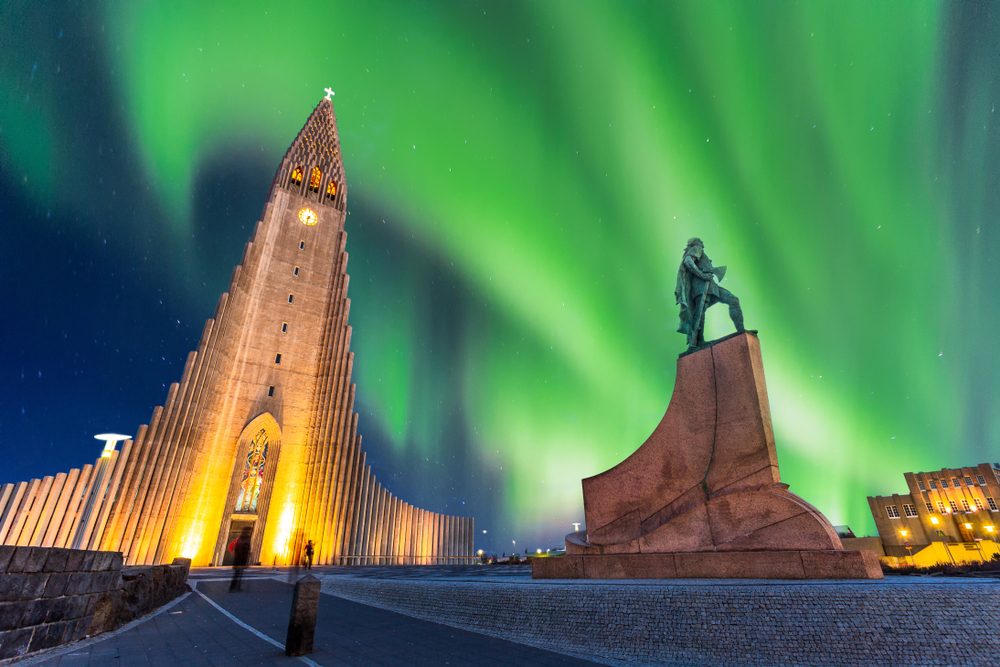
Reykjavik sits at 64°N latitude, inside the auroral oval that makes Iceland one of the world's most reliable aurora zones. The capital's urban glow presents challenges, but the northern lights remain visible from the city during geomagnetic activity with the right conditions.
Quick answer
Yes, you can see the northern lights in Reykjavik between September and April when darkness returns to the capital. Aurora visibility depends on three factors: solar activity (KP index), cloud-free skies, and minimizing exposure to streetlights and building illumination. The viewing window runs from 22:00 to 02:00 when the sky reaches full darkness and the city quiets. Urban light pollution reduces contrast, so darker neighborhoods and coastal areas offer better results than the downtown core.
Reykjavik generates approximately 60 percent less light pollution than comparable European capitals, a deliberate municipal policy that preserves aurora visibility within city limits. The compact downtown core concentrates most artificial light along Laugavegur and the Old Harbor, while residential districts spread across Seltjarnarnes peninsula and Árbær maintain dimmer streetscapes that allow the aurora to appear overhead during moderate geomagnetic storms. Whether you can see the northern lights in Reykjavik on any given night depends less on the city itself than on atmospheric conditions 100 kilometers above the ground. The aurora borealis forms when solar wind particles collide with oxygen and nitrogen in the magnetosphere, producing the green and occasionally red curtains that ripple across the polar sky. Reykjavik's position just south of the Arctic Circle places it inside the auroral zone during periods of heightened solar activity, typically measured by the KP index that forecasts geomagnetic storms on a scale from 0 to 9. A KP reading of 2 or higher brings aurora within sight of the capital, while KP 4 produces displays visible even from well-lit neighborhoods. Cloud cover erases all chances regardless of solar conditions. Iceland's maritime climate delivers frequent low-pressure systems that obscure the sky, making weather forecasting as critical as aurora forecasting. The Icelandic Met Office publishes hourly cloud-cover maps alongside aurora predictions, and experienced viewers check both before deciding whether to venture out. Coastal viewing spots along Grótta lighthouse or Seltjarnarnes shoreline combine darker skies with unobstructed northern horizons, where the aurora typically begins as a faint green arc before intensifying into vertical rays and coronas. Viewing from Reykjavik eliminates the need for guided transport to remote locations, a practical advantage during short winter visits. The tradeoff is reduced contrast and occasional interference from passing cars or illuminated buildings. A KP index of 3 or higher compensates for urban conditions, delivering aurora bright enough to photograph with a smartphone and visible to the naked eye as dancing bands of green light. Patience matters: the aurora moves in waves, brightening and fading over 20 to 40-minute cycles, and the most vivid moments often arrive after midnight when the city's ambient light diminishes and the magnetosphere aligns with Earth's magnetic field.
“Reykjavik generates approximately 60 percent less light pollution than comparable European capitals, a deliberate municipal policy that preserves aurora visibility within city limits.”
The northern lights are visible from late August through mid-April when the nights are sufficiently dark. To maximize visibility, observers should aim for the best arrival window of 22:00–02:00.
1°C to 5°C. Unpredictable skies.
The diminishing daylight hours provide longer windows for potential activity.
-5°C to 2°C. Cold, frequent snow.
Peak darkness allows for extended observation opportunities during long nights.
0°C to 4°C. Variable conditions.
The equinox period often sees increased solar activity before the return of midnight sun.
Verdict: The best opportunity occurs between late September and March during the arrival window of 22:00–02:00, when deep darkness provides the necessary contrast.
The Northern Lights are a natural phenomenon occurring in public areas, making them accessible at all hours of the day and night. While viewing areas are always open, successful observation depends entirely on darkness and weather conditions rather than a set schedule.
Reykjavik serves as the primary base for viewing, though light pollution within the city center often limits visibility. To observe the aurora, you must travel to darker locations on the city outskirts.
Strætó lines to Seltjarnarnes or Grótta
Route 41 toward the outskirts
Walk from city center to Grótta Lighthouse
The best arrival window is 22:00–02:00. Prioritize coastal areas like Grótta, as these spots offer lower light interference and clearer views of the northern horizon.
Viewing the aurora in Reykjavik requires preparation for cold weather and dark conditions, plus tools to track aurora activity.
Reykjavik's urban glow and visitor impatience account for most missed sightings. The errors below cost people clear views.
Staying in the brightly lit city center
Move to darker areas outside the downtown core where street lighting doesn't wash out the aurora. Parks on the city edge or coastal spots offer better contrast.
Expecting instant results and leaving after 20 minutes
The aurora is unpredictable. Plan to wait at least one to two hours in a dark location, checking the sky periodically as activity fluctuates.
Viewing on nights with heavy cloud cover
Check the weather forecast before heading out. Solid cloud blocks the aurora completely—clear or mostly clear skies are essential.
Ignoring the aurora forecast and going on low-activity nights
Consult the KP index and local aurora forecasts. A KP of 2 or higher improves your chances significantly in the Reykjavik area.
Assuming any night in winter guarantees a sighting
The northern lights depend on solar activity, weather, and darkness. Even in peak season, sightings are never guaranteed—patience and flexibility matter.
Everything you need to know about can you see the northern lights in reykjavik
Yes, you can see the northern lights in reykjavik under the right conditions. Success depends on solar activity, clear skies, and minimal light pollution.
The northern lights are a natural phenomenon and there is an entrance fee of 0 ISK for viewing them in public areas. You do not need to purchase a ticket to watch the sky from open spaces.
The best arrival window is 22:00–02:00 when darkness is deepest. This timing ensures the best visibility away from city light pollution.
The aurora season typically begins as nights get darker in late autumn and continues through winter. While sightings occur throughout the night, the darkness of the midnight hours provides the best opportunity to see the northern lights in reykjavik.
While it is technically possible to see the northern lights in reykjavik city limits, light pollution often makes it difficult. Seeking a darker location away from artificial glare improves your viewing experience significantly.
Many visitors choose a guided aurora boat tour to reach darker waters and escape urban brightness. These excursions are a popular way to maximize your chances of witnessing the solar activity.
Yes, you can see the northern lights in reykjavik with children, provided they are dressed warmly for the cold night temperatures. Preparing for the conditions helps ensure a comfortable experience for the whole family.
Northern Lights Boat Tour Iceland Reviews
Read more Tickets & toursNorthern Lights By Boat Tour Iceland
Read more GuideIs Reykjavik a Good Place to See the Northern Lights?
Read more Tickets & toursNorthern Lights Boat Tours from Reykjavik
Read more Tickets & toursNorthern Lights Yacht Tours
Read more Tickets & toursBest Northern Lights Boat Tours
Read more